Building agents
Hire the engineer who builds your agent and ships it to production.
Teams usually call me when
“We have an agent pilot that’s stuck before production.”
“The prototype has no tests, no approvals, and no record of what it did.”
“We need code our own engineers can extend after you leave.”
What lands in your repo
your-repo/├─ agents/plan-writer/│ ├─ orchestrator.ts # plans the document, assigns sections│ ├─ drafter/ # writes from retrieved sources│ ├─ fact-checker/ # traces each claim to a source│ ├─ fema-reviewer/ # checks against CPG 101│ └─ tools/ # search, retrieve, cite├─ evals/│ ├─ golden/ # decades of approved plans│ └─ plan-quality.eval.ts├─ runbooks/ # on-call, rollback, model swap└─ infra/ # deploys to your cloud
$ npm run evalsplan-writer · flood annex✓ every claim traces to a source document✓ covers each CPG 101 base plan section✓ follows the structure of approved annexes✓ scores at or above the golden setrun on every prompt, model or retrieval change
Grounded in fact
Each claim in a draft points back to the document it came from, or it is cut.
Checked against FEMA
A reviewer agent reads the draft the way a state reviewer would, against CPG 101.
Measured against a golden set
I led months of work raising the output to meet, then beat, decades of approved plans.
How the weeks go
Spec and first evalsthe one KPI it’s measured onWeek 1
Gateend to end on fixturesGo or no-go, end of week 2
Integrations and approvalstools, tracing, sandboxingWeeks 3 to 6
Production and handoffyour cloud, runbooksWeeks 7 to 8
If week two is a no, you pay for two weeks and keep the spec, the fixtures and the report.
How I build it
The rules I hold myself to, in the order they come up on a project.
Start with the workflow
I map the job a person does today before I pick a model. The agent earns its place one step at a time.
Approvals before actions
Anything that spends money or changes data waits for a person to say yes.
The interface is half the work
People trust an agent they can watch, stop and correct. I build that part too.
Evals before demos
If I can’t measure it, I don’t ship it. Every agent comes with the tests that prove it still works after the next model change.
Code the next engineer can read
Small, plain, typed. Your team should understand it in an afternoon.
Done before
IEM
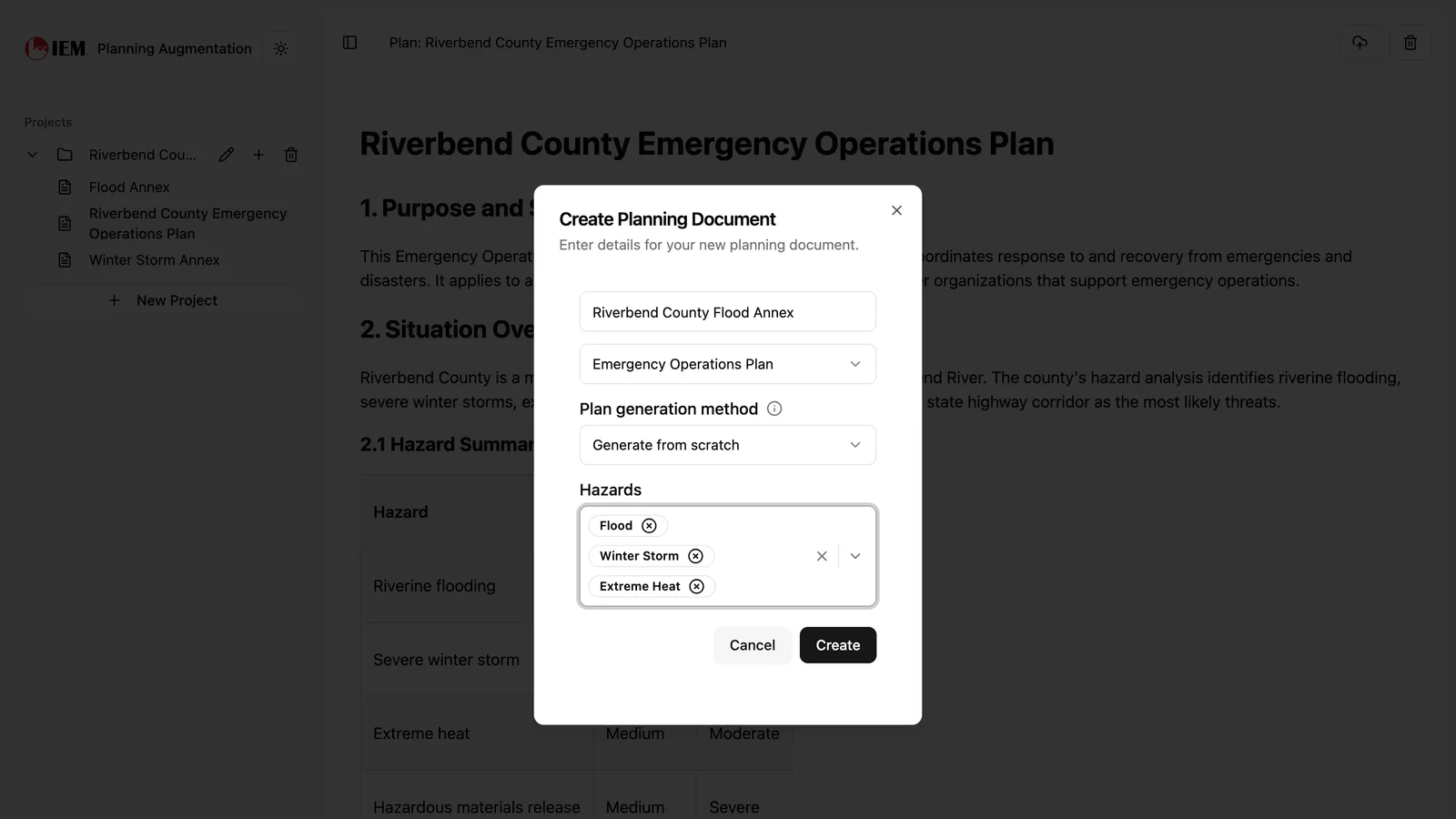
Agents that draft emergency operations plans, checked against FEMA guidance.
Built as a contractor to Presolved: an orchestrator, sub-agents, and months of evals against decades of approved plans. Read the story
b4.run 311 stars · 5,950 downloads a month
For your security and procurement review
- Data
- Stays in your cloud account. Nothing passes through my systems or a vendor runtime.
- Models
- Your provider account and keys. Swappable; the evals decide.
- Code and IP
- Yours, in your repo. Built on MIT-licensed libraries.
- Access
- Least privilege, removed at handoff.
- Paperwork
- US LLC. Your MSA and NDA or mine. Professional liability insurance. W-9 on request.
- Billing
- Fixed scope per phase, invoiced net-30. The week-two gate caps the risk.
Questions
- Which models?
- OpenAI out of the box, and other providers through b4’s LangChain adapters. The eval suite is how you decide.
- What if week two is a no-go?
- You pay for two weeks and keep the spec, the fixtures, and the report.
- Do you need our engineers?
- One engineer who will own it, a few hours a week, so the handoff is a formality.
- Is there a maintenance contract?
- No. The agent runs in your cloud on MIT libraries, and you can keep the code without me.
Start with the one job the agent should do.
Two or three sentences is enough. I’ll reply within a business day with whether it’s a good first agent, and what week one would look like.